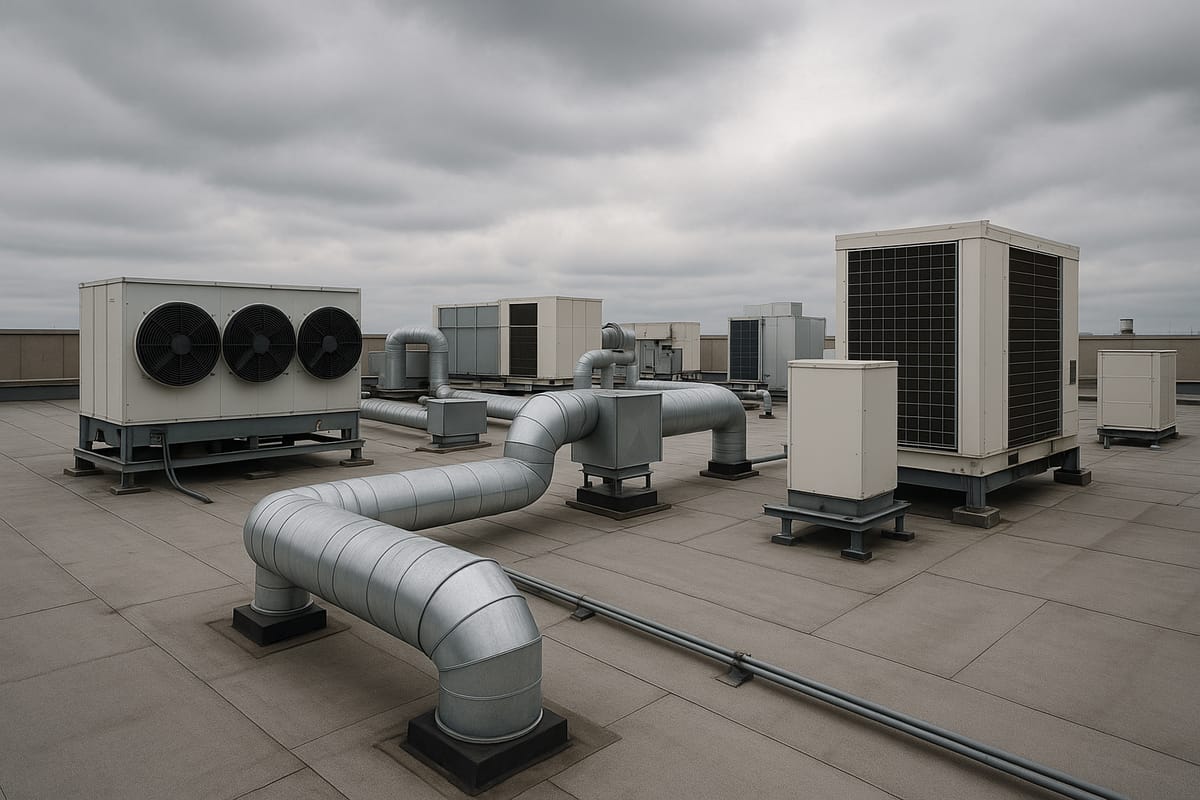
The facilities teams making real progress on energy goals aren't running a separate decarbonization program — they're using the capital work they were already doing. Chiller hitting end-of-life? That's not just a replacement decision, that's your window to spec the high-efficiency unit, lock in the carbon reduction, and make the business case once instead of twice. The asset was coming out regardless. The only question is whether you capture the efficiency or leave it on the table. Most teams leave it on the table because the conversations happen in different rooms — maintenance planning in one, sustainability in another. Put them in the same room.
Your Fixed-Rate Contract Is a Clock, Not a Shield.
Fixed-rate electricity contracts are keeping a lot of facilities insulated from current volatility — that part's real. But the story buried in the Facilities Dive piece is the diesel exposure. If your site runs backup generators, on-site fuel storage, or any diesel-dependent equipment, that cost isn't fixed. It's floating, and it's been climbing. More importantly: when your fixed-rate contract rolls over, your negotiating position is entirely determined by what your load looks like. Facilities that used the calm period to cut consumption will have leverage. Facilities that didn't will just be paying the new rate. You have somewhere between now and your renewal date to be in the first group.
Water Damage Is Still the Most Embarrassing Loss in Facilities.
Embarrassing because it's preventable. Has been for years. Leak detection sensors are cheap, installation is straightforward, and the ROI math against a single ceiling collapse isn't close. And yet water damage keeps showing up near the top of insurance loss reports for commercial and institutional buildings. The problem isn't technology adoption — most facilities have sensors somewhere. The problem is that the sensors get installed once and never reviewed. Placement was right for the building as it was configured three years ago. Monitoring alerts go to an inbox nobody checks on weekends. Response protocols exist in a document nobody's tested. Treat it like a maintenance program — scheduled sensor audits, verified alert routing, a response drill at least once a year — or don't bother having the sensors at all.
---
THE FIX
If your energy contract is renewing in the next 18 months, the audit starts now. Not when the renewal notice arrives.
Pull your utility bills for the past 24 months. Calculate consumption per square foot by system — HVAC, lighting, plug loads if you can separate them. Flag anything that looks worse than your baseline from two years ago or worse than comparable facilities in your sector. That's your short list.
Then rank the efficiency projects on that list by simple payback. Be honest about the numbers — installed cost divided by annual savings. Projects with payback under two years should already be funded or you need a better conversation with your CFO. Projects in the two-to-four-year range are your negotiating ammunition. When you sit down with procurement or your broker, you're not asking for a better rate on the same load. You're presenting a documented plan to reduce that load by a specific amount over a specific timeline. That's a different conversation. Procurement can work with a number. They can't work with "we're planning to be more efficient."
The facilities that negotiate well on energy contracts aren't the ones with the best broker relationships. They're the ones who walked in prepared.
---
TOOL SPOTLIGHT
Fracttal
Fracttal is a CMMS with a genuine emphasis on asset lifecycle tracking, which is either exactly what you need or more than you need, depending on what you're managing.
If you're running a facility with heavy mechanical equipment — chillers, boilers, air handlers with real service histories — the depth here is useful. Full equipment history, maintenance trigger logic tied to actual asset condition, compliance documentation that doesn't require you to rebuild it from scratch every audit cycle. For that use case, it holds up.
If you're managing a lighter operation and your primary need is work order management and PM scheduling, the interface will feel like more complexity than the job requires. There are simpler tools that do that job without the learning curve.
Worth noting: I've seen it work well in healthcare facilities and light industrial settings where knowing a specific asset's complete service history actually changes the next maintenance decision. That's the case it's built for. If that's not your situation, be honest about that before you start the implementation.
Check it out → https://fracttal.com
---
THE NUMBER
Under 15%
That's where most building automation systems are actually performing — according to industry benchmarking data from ASHRAE and several large commercial portfolio operators — despite being capable of significantly more.
The gap isn't a technology problem. Most BAS platforms installed in the last decade have the capability to do considerably better. The gap is a commissioning and configuration problem. Systems get installed to spec, the commissioning team leaves, and nobody goes back. Schedules drift. Setpoints get overridden during one cold week and never restored. Sequences that looked right on paper never got tuned to how the building actually operates.
If your BAS hasn't had a full recommissioning in more than three years, you're not running your automation system. You're running whatever it defaulted to.
---
THE STANDARD
Corridor clearance under NFPA 101 Chapter 18/19 is one of the most reliable ways to pick up a finding you didn't need to get.
The rule is 8 feet minimum, unobstructed, in any corridor used for patient movement. Most facilities directors know that. The problem is enforcement between surveys. Supply carts parked "for ten minutes." Mobile workstations left against the wall at shift change. Equipment staged outside a room during a procedure and never moved back. None of it feels like a violation in the moment. All of it counts when a surveyor walks the floor.
Do a corridor audit on a Tuesday afternoon, not the week before your survey. Walk it yourself — don't send someone who'll see what they expect to see. If you can't maintain 8 feet clear, end-to-end